
Owen Marsten, Intern - thefranklinpressnews@gmail.com
Vecinos is a nonprofit health agency that provides free health care to uninsured people, with a focus on farmworkers and the Latino community in Western North Carolina. The entirely bilingual program marked its 20th anniversary on Feb. 27. Vecinos means neighbors in Spanish.
“I would say that our biggest accomplishment is building trust in the community and being an agency that the community looks to for resources. The community expects [Vecinos] to be in solidarity with them,” said Marianne Martinez, CEO of Vecinos. “They see us as partners, not only in health care, but in everything. When they need legal service or they’re having trouble making their rent payments, they call us knowing that we are going to help them. There’s nothing better than that, in my opinion.”
According to Martinez, Vecinos served around 2,000 patients in 2023. About a third of these were migrant workers, a third were seasonal workers, and an additional third were employed in another area of work. The United States government defines a migrant worker as an individual who travels more than 75 miles away looking for work in agriculture. A seasonal worker is someone who lives in the area and works in agriculture seasonally. Martinez estimates that 98-99% of Vecinos’ patients are Spanish speakers.
Vecinos currently operates a health clinic in Cullowhee in Jackson County as well as two mobile clinics. These mobile clinics take the service to patients. Many of their patients cannot get to the clinic in Cullowhee, whether that is due to working long hours or not holding a driver’s license.
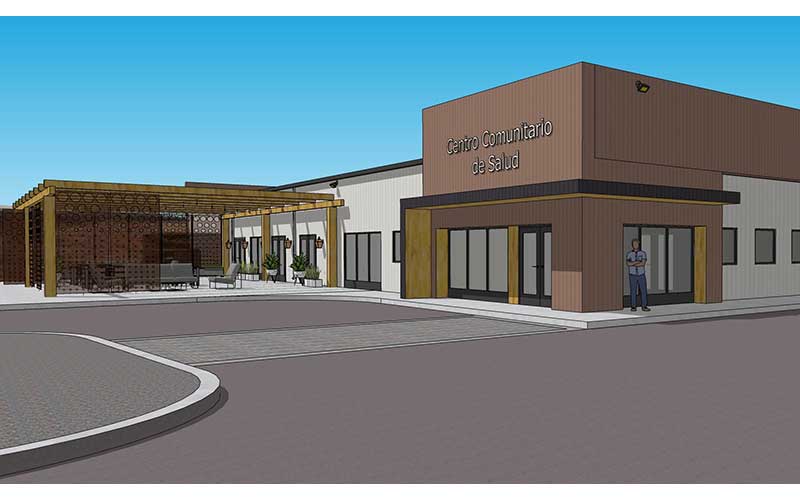
Vecinos plans to open a Community Health Hub in Franklin and is expected to be fully operational in January 2025. This health hub will feature the program’s newest and largest medical office, as well as social care resources through other agencies such as immigration services, legal services, tax preparation, interpretation, health education and domestic violence services. Martinez said that in the past, Vecinos was the only resource for Spanish speakers, but that in recent years they have helped foster new organizations with the same patient community.
“It will be what we’ve always done, but in one solid location with easy referral to other agencies we always refer out to,” said Martinez. “We are barley scratching the surface. This expansion is going to allow us to serve several thousands more people.”
Martinez explained that much of Vecinos’ work is based on the concept of health equity. According to the CDC, health equity is the idea that everyone deserves access to healthcare, regardless of income or any other factors. It also seeks to fix the historic disparities in the health care of minority groups and underserved communities.
“Health equity is the concept that everybody deserves health care in a way that doesn’t bankrupt them,” said Martinez. “Native English speakers are used to the way that things work, even though it’s very confusing. But, we can do it because we’ve grown up in it. So regardless of the fact that I grew up uninsured and low income on a farm in Western North Carolina, I have so many other privileges. It’s above and beyond what our patients get, if nothing else just based on language.”
Agriculture is the largest sector of North Carolina’s economy. In most cases, state and federal labor laws are different for farmworkers. For example, minimum wage is not extended to farm workers, who may be paid by the bucket picked. Some of these workers are only making $30 a day, said Martinez. In North Carolina, the minimum working age is 14 with a working permit, but for farmworkers it is 10 years old with minor restrictions. Farmworkers are also exempt from worker’s compensation and overtime pay.
“Agriculture has a hand in paying for almost everything in this state. Yet, our farmworkers are 10 years old making $30 a day. How is that just? How can we as a state or nation stand in solidarity with these people who we say are essential workers, and say that’s OK,” Martinez said. “On top of that we don’t provide health insurance and make them foot the bill for things that are not their fault. Everybody has to go to the doctor. And yet we’re expecting our farmworkers to take the brunt of that. That’s why we talk about health equity.”