
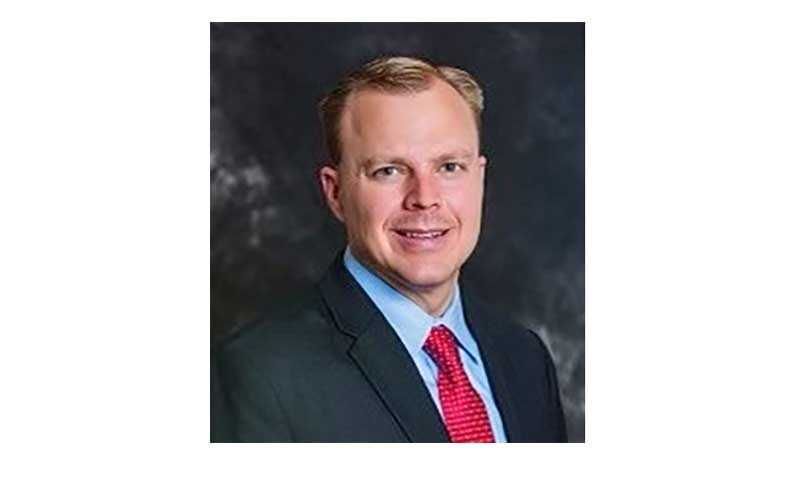
Angel Medical Center CEO Clint Kendall says he’s doing his best to get monoclonal antibodies to everyone who needs them, but the best thing to do about COVID-19 is still to get vaccinated.
Monoclonal antibodies, also called mAbs, are laboratory-grown proteins that can be designed to fight off a particular infection and introduced into the body by an infusion or shot. The treatment has become an increasingly popular and visible way to fight COVID-19, particularly among people who are skeptical of the vaccines. Earlier this month, the Food and Drug Administration expanded emergency use authorization for the treatment to all age groups, and the North Carolina Department of Health and Human Services recommends it as a potential solution for reducing hospitalizations.
“If you have recently tested positive for COVID-19 or been exposed to someone with COVID-19, then monoclonal antibody therapy may help you feel better faster and prevent the need for hospitalization from COIVD-19,” reads a Dec. 8 release from the NCDHHS. “Treatment must be administered early to work.”
However, some Macon County residents have been displeased with the availability of these treatments. Many have appeared before the Macon County Board of Commissioners to complain they weren’t able to get antibodies from Angel Medical Center. The commissioners were frustrated that the hospital hasn’t been more forthcoming in working with interested patients.
“I’m getting phone calls every day,” Commissioner Josh Young said. “It’s hard to hear somebody who’s passionate and who’s very upset because they were denied service in Macon County.”
Kendall was at the Dec. 14 Board of Commissioners meeting and addressed some of the confusion. Even with the age limit removed, not everyone can go to the hospital and immediately get treatment. Patients still have to be at high risk, and that risk has to be identified by a physician.
“You have to have a doctor’s order, period, to get a med, and that’s a medical, legal thing,” Kendall said. “I can’t give you a med as a nurse, as a paramedic or anything without a doctor’s order.”
Supply is also an issue. The hospital is trying to make sure the most high-risk patients get monoclonal antibodies because they don’t have access to enough of them to provide treatment to everyone who wants it. It’s a similar situation to the vaccines when they were first introduced; more antibodies may be more available once more time has passed, but for now, there’s only so much each medical provider can do.
“We would love to have more, and we would give more, but we don’t,” Kendall said. “I get 10 a week… that’s about all we have.”
Kendall also took the opportunity to point out the similarities between vaccines and mAbs. Both measures rely on introducing antibodies to the body to stave off disease, both have emergency use authorization from the FDA, both are effective the majority of the time and both have been shown over a long period to be safe for general use with minimal risk of negative side effects. Perhaps the biggest difference is the availability of the vaccines – anyone in Macon County can call the Health Department for an appointment, get their shot within a day or two free of charge, possibly get a second dose a month later if necessary, and then their risk of getting severe COVID-19 is reduced for another six months. Most health care providers agree preventing any disease is safer and healthier than waiting to cure it.
“Everybody’s scared about the vaccine… when you put the monoclonal antibodies in your body, it’s doing the same thing,” Kendall said. “It’s doing about the same thing in your body. It’s just creating antibodies.”
For more information on monoclonal antibody treatment and if it's right for you, call 877-332-6585 or go online to www.covid19.ncdhhs.gov/findtreatment. For more information on COVID-19 or to schedule a vaccination, booster or test, call the Macon County Public Health COVID-19 call center at 828-349-2081 or go online to www.maconnc.org/covid-19.html.