
After getting a quarter-cent sales tax increase on the ballot for the third time as a county commissioner, Gary Shields is now working with community members to market the change and raise more than $2 million per year for the county.
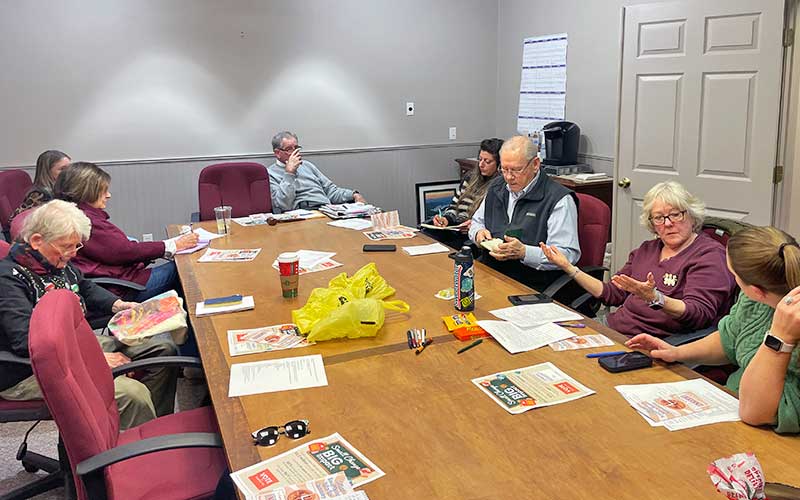
The first “quarter-cent planning team” met Tuesday, Dec. 16 at the Franklin Chamber of Commerce with a collection of 10 attendees invited either by Shields or Betsy Baste, chair of the Macon County Democratic Party. Among those who showed up were Nina Parrott (standing in for county HR Director Tammy Keezer), former Mayor Jack Horton, Marie and Mick Roberts, Morgan Stewart of Stewart Communications, Eric Haggart of the Tourism Development Authority, massage therapist Marianne Ingram and retired human resources worker Betty Waldroop.
The change would not affect items like unprepared groceries and gas, and it would only apply to purchases greater than $4 ($0.01). A taxpayer would have to spend $400 on goods before spending an extra dollar in sales tax. Advocates for the measure says the sales tax will help offset a need for revenue that would otherwise have to be filled by a property tax increase. They also point out all seven of the state’s westernmost counties have implemented the increase and benefit from Macon County residents’ out-of-county purchases. Likewise, Macon County’s tax burden would shift partially to tourists and shoppers from surrounding counties.
The question of what would happen to the tax policy as the penny is phased out was addressed, but not answered right away.
The group determined they need to develop a simple message for voters to explain what the new policy would do, why voters should support it and where the money would go.
“Someone told me something one time that I’ve always remembered,” Horton said. “He said to get people to vote for you, they’ve got to have at least reasons. To get somebody to vote against you they just need one reason. And that’s true, not only of the individuals but I think of any proposal you put on there. So you’ve got to have good reasons that people understand.”
“I own retail businesses and when you have to explain the purpose of a product on the shelf, it generally doesn’t get sold,” Baste said. “If you have to explain and educate to every single person, individually, why they should buy this … it takes a lot of time and energy and effort. So it’s got to be simple and direct.”
Stewart added the message must be specific and direct about how the tax benefits the voter, saying, “I don’t have kids in school, but if I know that this is going to help repair broken-down school buildings, which I’ve read in the news is a problem, or if it’s going to help uplift the Macon County [animal] shelter, those are things that I can vote for. Those things affect me … you have to tell people what they get for their money.”
Horton said Haywood and Jackson counties marketed their quarter-cent increase as benefitting the community colleges, making improvements to buildings and training that would directly impact the economy. Jackson County also used it for the public school system, Stewart said. Shields agreed to get more information on how surrounding counties had marketed the increase and spent the new revenue.
The group floated projects for schools, libraries, the animal shelter, veterans and senior services, but ultimately decided to get a list of projects from the county that could potentially be funded through the new revenue before deciding. The group agreed they would also need more information on what projects community members were interested in seeing.
Haggart suggested a “rebrand” for the tax measure to reframe it not as a sales tax increase, but as a way to reclaim some small-purchase revenue that would otherwise be going to Raleigh and shift the tax burden somewhat away from residents and onto visitors, tourists and through-travelers shopping and eating in the county.
“The voter feels like they’ve been wronged. Let’s get ours back,” he said. “Because they’re taking it from us right now.”
The group agreed to meet again the first week of January to look over drafts for marketing materials and further review funding options for the potential new tax revenue.