
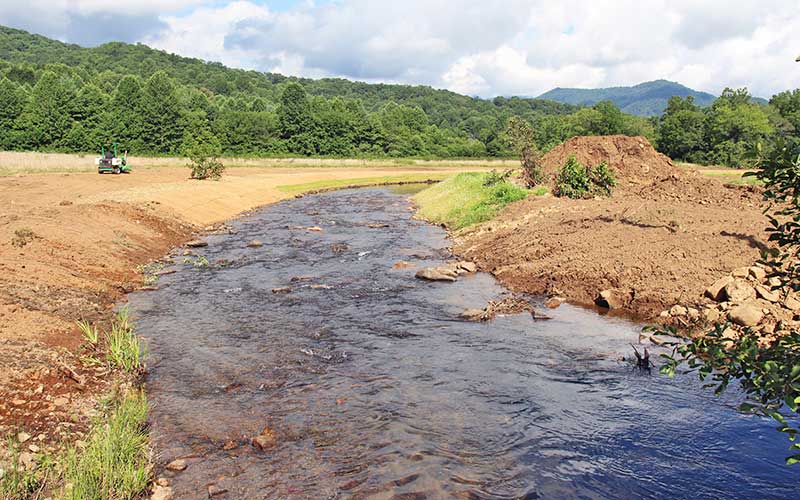
A North Carolina Department of Environmental Quality contractor is at work rebuilding the riverbed along a stretch of Jones Creek near Maiden’s Chapel.
The project “proposes to restore and enhance 5,764 linear feet of cold water streams within this critical habitat area,” according to Sascha Medina, public information officer with the Division of Mitigation Services. The area will be protected with a 15.4-acre easement.
The Division of Mitigation Services developed the plan for the project, which was proposed as early as January 2021, finalized in October 2024, and work began this year.
“The site was selected due to its ability to support local watershed objectives and goals as well as contribute to the protection of significant Natural Heritage Habitat,” Medina said. The Natural Heritage program seeks to identify natural habitats for rare species across the state, aiding in their protection.
“Additionally, site streams were in various stages of degradation primarily due to agriculture practices and historic livestock practices within the floodplain,” Medina said.
Wildlands Engineering worked with various departments to examine the environmental and cultural impact of the project, accounting for the presence of rare and endangered species and planning the project around minimizing any negative impacts, like ensuring that small wildlife could get under fencing designed to keep out cattle, and placing no unnatural lighting at the scene that could harm nocturnal life.
Wildlands also worked with Archaeological Consultants of the Carolinas to conduct an archaeological survey and contact local tribal groups to ensure there were no concerns of disturbing historic or sacred ground.
A series of goals outlined in the project plan include installing fencing to prevent livestock from accessing stream channels and causing erosion or damaging or grazing native vegetation, restoring that same native vegetation and removing invasive species, creating a wooded buffer zone, restoring eroded or destroyed banks and streambeds (and making changes to reduce further erosion) and adding woody material and structures to attract biodiversity.
“These actions will reduce fecal, nutrient and sediment inputs to project streams,” Medina said, “and ultimately to Cartoogechaye Creek and the Little Tennessee River, as well as reconnect instream and terrestrial habitats.”