
Macon County Schools is facing an estimated $800,000 shortfall for this school year after not receiving a grant it had previously gotten annually, COVID funds running out and previous federal education cuts.
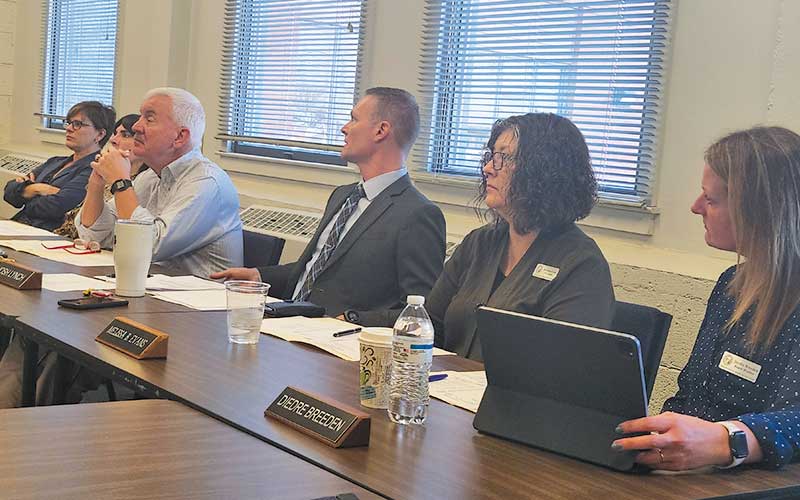
Finance Director Alayna Ledford called it “a really rough estimate” during a special morning meeting on Tuesday, Feb. 4.
As of Feb. 3, the day before the meeting, expenses outpaced revenues by $468,146.79. Using an average shortfall of $66,878.11 per month (not all months are the same), Ledford estimated the $802,537.35 total from 12 months of that average.
Any deficit would be paid out of the school system’s fund balance. The fund balance, as of June 30, 2024, was $3,752,381, meaning with the $468,146.79 taken out, it’s currently $3,284,234.21, and would go below $3 million by June 30.
Ledford noted the numbers will be different as the rest of the fiscal year plays out. Board Chair Jim Breedlove asked if there were any “large, unexpected expenses” upcoming and Ledford said no.
Ledford confirmed after the meeting the deficit is due to various federal grant issues, none of which are directly related to the current federal funding cuts generated by the Trump administration.
One of those cuts came to Title I. According to the Department of Education, Title I “provides supplemental financial assistance to school districts for children from low-income families. Its purpose is to provide all children significant opportunity to receive a fair, equitable, and high-quality education, and to close educational achievement gaps by allocating federal funds for education programs and services.” The exact amount of those cuts wasn’t disclosed at the meeting.
MCS Superintendent Josh Lynch said all federal title funds have been “drastically reduced.”
“We’ve had to stretch the dollar, which is less, further,” Lynch said. “Which gives the school side, unfortunately, fewer dollars to be able to do what they need to with.”
Another reason for the decrease in funding was the end of ESSER, which wrapped up at the end of 2024. ESSER was a school funding source approved by Congress during the COVID-19 pandemic.
In October 2024, Lynch said Macon County Schools no longer qualified for the Rural and Low-Income Students (RLIS) Program, another Department of Education grant fund for rural school districts.
“This is the first year in a number of years, many years, that we have not qualified for that,” Lynch said of the RLIS Program. “And that was how we paid for instructional tutors at each site.”
As a result, Lynch said many of those tutors have not been brought back for the spring semester.
“We just did not have the ability to pay for them moving forward,” Lynch said. “That was a hit that we really were not expecting at all.”
When asked why MCS didn’t qualify for the RLIS Program, Lynch said it’s a complex formula that he doesn’t fully understand himself and the formula recently changed. RLIS is a federal formula that looks at economic development and determines if a school is at the 20% low-income students threshold to receive the funding. Lynch said MCS was at 16%.
MCS being left off the RLIS funding list isn’t an isolated event, Lynch said. Five other WNC counties did not qualify.
Lynch said this has nothing to do with the federal lunch program, which offers universal free lunches to schools that reach a certain low-income threshold. Nine of the school system’s 11 schools qualified this year, and the county funded universal lunch for the other two schools.
RLIS Program funding is re-assessed every year, Lynch said, meaning MCS could receive it this coming October.
Lynch also brought up the coming loss of more than $170,000 annually from the Secure Rural Schools program, which provides federal dollars to rural counties and schools impacted by reduced timber harvests on federal lands. The Secure Rural School program was to cease this year. Legislative action to reauthorize the program passed the U.S. Senate but is stalled in the U.S. House.
Breedlove said the presentation reminded him of 2008-09 when the Federal Job Fund disappeared and the MCS fund balance went down to $270,000.
Ledford also updated the board about the modernization the finance office is going through, saying it’ll help them keep better track of spending in real-time.
Lynch said at this point, there’s not much that can be done about this year’s funding woes and that he and Ledford will gather assessments and audits throughout the district to compile data this month and present to the school board, likely in March. Lynch said Interim County Manager Warren Cabe is aware and will visit the MCS Central Office with County Finance Director Lori Hall to better understand the budget needs.
“The ask is not to grow. We always want to grow and we want to improve, but the ask is really just to maintain everything,” Lynch said.
Board member Hilary Wilkes asked to receive a spreadsheet showing the county’s staffing needs once the administration has those from the principals. She wants the county to understand how much they’re getting from the federal government and state government.
“I’d like for [the county] to have the understanding that us maintaining still involves a lot of stress and a lot of people doing more than one job in one job,” Wilkes said. “Because what I fear is that if we add a couple of teachers here or a couple of support staff or whatnot in a request form, I don’t want to get pushed back saying, ‘Well, we don’t need these folks,’ because I feel like we have a lot of people wearing a lot of hats already.”
Wilkes praised the Central Office staff for doing a “magnificent job” in getting grants to cover discrepancies. Breedlove wants everyone involved to “hammer down” and prepare for the budget presentation to the commissioners.
A joint meeting between the school board and county commissioners was proposed to present the funding data.