
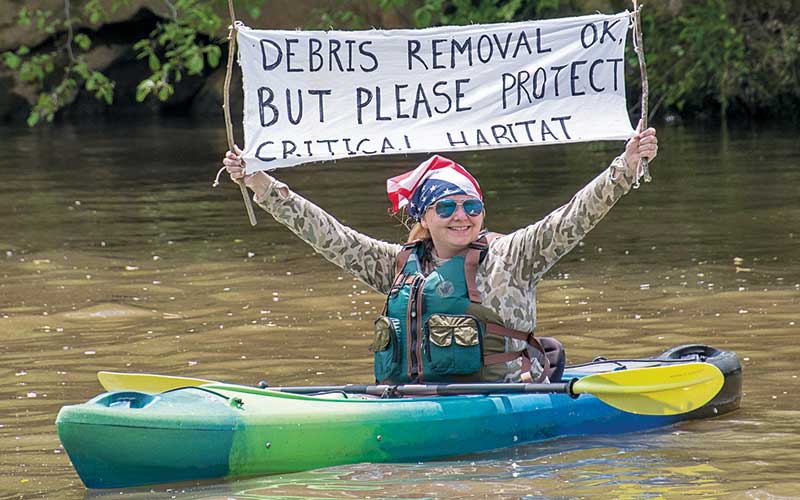
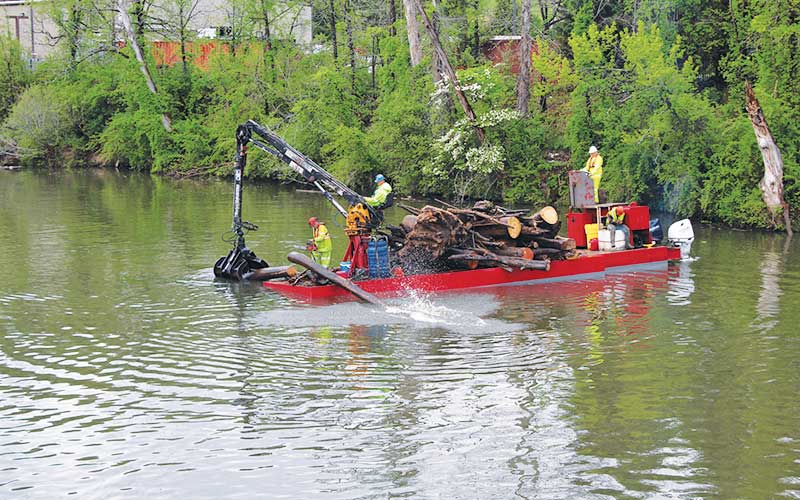
The U.S. Army Corps of Engineers has drawn some criticism from local nature and wildlife groups as the organization has hired contractors to assist with Hurricane Helene debris cleanup in the Little Tennessee River. Though the Corps has said the cleanup is an important part of recovery, critics say the contractors have been collecting more debris than necessary, damaging wildlife habitat on the Little Tennessee and removing ineligible debris from the river against FEMA’s own debris removal policies.
Corps contractors, including AshBritt (and Kituwah Services locally), have been at work pulling fallen wood and storm debris from Macon County waterways since the first week of April. In some waterways, that work is essential, said wildlife conservationist Jason Love.
The Western North Carolina waterways most heavily impacted by the storm saw big piles of debris that threaten to alter the rivers’ flow, trash and hazardous materials that can adversely affect wildlife. However, Love said, this is not the case in a lot of the locations where the Corps is operating, and he worries this scale of intervention is broadly unnecessary in the Little Tennessee.
Love is one of many local fishers, conservationists, businesses and hobbyists who have been startled by the scale of debris removal along local waterways. Angela Faye Martin, who leads tours along the Little Tennessee, said she was alarmed to see live trees and large amounts of soil removed and activity that has increased the turbidity of the water beyond expected levels. Since then, she said she has struggled to gather information on the cleanup efforts, where the contractors expect to be operating each day and what kind of care is being taken to avoid damaging wildlife habitats or removing the vegetation that holds the riverbank in place.
A meeting was held Friday, April 25, with U.S. Rep. Chuck Edwards, MountainTrue, local business owners and representatives from local conservation groups and river basins. Love, who represented the Little Tennessee River at the meeting, said the French Broad, Davidson and Little Rivers were all represented alongside Conserving Carolina and locals who came to the meeting to voice concerns about the state of debris removal.
Love said there was a general consensus among those sharing their thoughts and observation: though there are many places where the Corps’ debris removal mission is necessary, there is far too little public-facing communication and oversight to prevent abuse of the contractors’ mandate — especially given that, because the contractors are paid by the ton of debris removed, they are directly incentivized to take more debris from the waterways.
Callie Moore, western regional director for MountainTrue, said the conservation organization had met with the Army Corps of Engineers as debris removal first began in the region, expressing similar concerns about the removal of excess debris and potential harm to local wildlife habitat and ecosystems. Moore said Corps contractors have continued to repeat the same mistakes in other waterways across the region.
Love said he had seen easily 12 trees removed from the waters’ edge due to contractor activity, some of which were still alive and one of which was a rare species. He said, though he had not seen the trees beforehand, he was not convinced that the trees were at any risk of falling or being washed down the river anytime soon. Love also shared in a Press guest column on April 23 that the reckless removal of vegetation from the water’s edge could cause worse erosion than debris pileup.
A bigger concern for Love was the plans for the Corps to begin working in neighboring waterways, including a habitat below Lake Emory where there are endangered species. Love said a goal of his was to see contractors utilize North Carolina Wildlife Resources maps to work around high-concern areas where rare or endangered species might be more likely to reside.
Macon County manager Warren Cabe met with Kituwah and Corps representatives Monday to discuss some of the community’s concerns and what changes might be possible to help assuage them. Cabe said that both Kituwah and the Corps were very receptive and recognized community concerns and their importance. Cabe said they would be increasing efforts on public information and oversight fronts, including providing a map of where the contractors are expected to be working. Warren noted that there were many people who had positive reactions to the Corps’ work, in particular where debris buildup was threatening erosion or banks along private property.
The Press reached out to the U.S. Army Corps of Engineers, but they did not respond to a request for interview for this article.