
As the COVID-19 pandemic transforms the fall 2020 sports season, it has left players, staff and officials uncertain as to what this year’s changes may mean.
Fans wonder when and even if they will have a season. Players wonder what that season might look like if it happens. High schools, colleges and professional leagues wonder how they can fund their teams with this year’s likely cratering revenue. Lost among the questions of money and when fans might be able to watch their teams has been one with more personal and far-reaching implications: the question of how the pandemic affects high school seniors seeking scholarships.
“If the NCAA grants another year of eligibility, that means these [college] seniors will get another year,” said Franklin High School boys’ basketball coach Doug Plemmons. “With this senior class of high school kids, I don’t know that they’ll be looking for a lot of these players because they’ll have the kids that are already on their team for another year. The normal [idea] is ‘These kids leave, and I have to recruit this many kids coming in.’ This year I don’t think it’s going to be that way.”
For many college seniors seeking athletic scholarships, social distancing rules put in place during the pandemic create a disadvantage in securing a roster spot. Under current NCAA rules, Division 1 coaches are barred from in-person contact with potential recruits until at least Sept. 30, while Division 2 coaches may only contact players via phone/email or on the coach’s own campus. This effectively makes it more difficult for seniors and college coaches to meet one another, skewing decisions in favor of players already on the team.
“Not being able to have official visits is kind of worrisome,” said FHS senior track and field star Hannah Angel, who is still undecided in her college search. “Some of the coaches I’ve talked to have kids committed and set to run for them this upcoming year that have never even set foot on campus. It’s really just made everything a blur, so I’m just hoping for the best.”
Like many other seniors across the nation this year, Angel has had to think of ways to stand out without meeting coaches face to face. Although she is an FHS school record-holder in the 100-meter hurdles, Angel and her mother, Jennifer, have created a profile on Next College Student Athlete, a service that connects high school athletes with college coaches. The pandemic has robbed her of more than just a chance to meet coaches, however. Normally a member of Franklin’s cross country team in the fall, this year Angel decided to forgo cross-country to train for track and field in the spring, but this month the North Carolina High School Athletic Association cancelled this year’s indoor track season.
“It kind of stinks because indoor was one of my best chances to get near a state championship,” she said. “Hopefully it all pays off.”
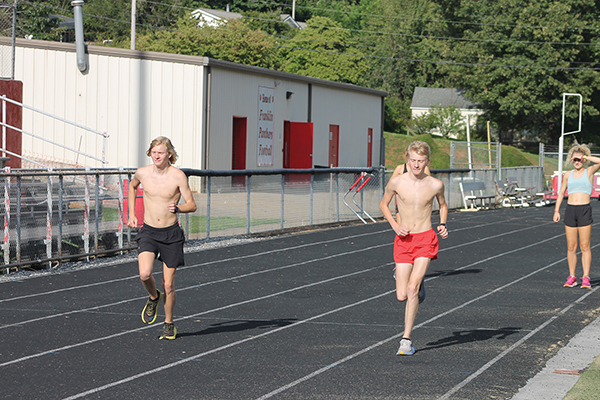
For Angel’s former cross-country teammates, the pandemic has also created problems. After finishing first and second at the conference meet last season and spending this summer training at elevation in the Arizona mountains, Ethan and Nathan Stamey have also yet to sign college offers. Although the brothers have strong cross-country resumes, they have also found it hard to gain traction with college coaches.
“We’re trying to look for people to contact, but with the virus no one’s really doing much, so that kind of hurts it,” Ethan said. “[We were working] a lot harder, and then all this hits, so it kind of sucks.”
For players, just as any other college-bound students, senior year is a time of big decisions. While families pore over which college is best for their athletes, the process is often fraught with questions over things like location, academics, the team itself and scholarship amounts.
This year those questions have been compounded by more serious questions: Will I be able to prove my talent on the field/court/track/pool this year? How can I make myself stand out? How can I earn a scholarship when coaches are uncertain of my character? In the face of so much uncertainty over such an important decision, Angel said she is only worrying about the things she can control.
“This summer we got out two or three months early, and I’ve had this whole six months where I can’t weight-train, I can’t be with the team, we’re really not allowed to be around coaches, and it’s really just pushing yourself. It’s really mentally taxing.” she said. “It’s finding that motivation to put yourself through the pain of working out and getting better while not knowing when you’ll get the chance to prove what you’re doing and how hard you’re working to yourself.”