
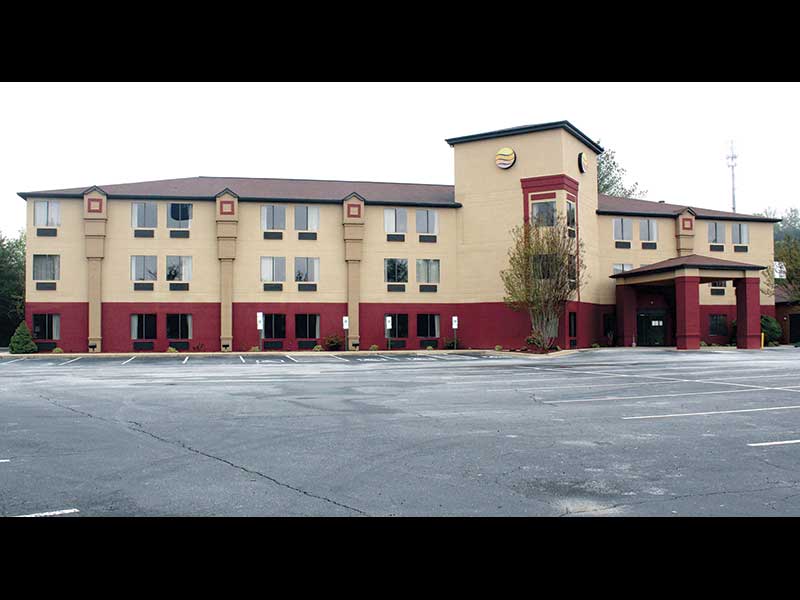
Gov. Roy Cooper’s three-phase plan to reopen the state doesn’t specifically mention hotels, campgrounds and other lodging sites, but owners of such businesses in Macon County are largely in agreement – they want to open back up as soon as possible.
Hotels have been permitted to offer rooms to traveling health care professionals and utility workers throughout the state’s shutdown, so there has been a little bit of business to go around.
John Nichols, manager of the Sapphire Inn, said the fact that his business is still surviving with such reduced traffic is a testament to the need for lodging services.
“Doctors, nurses, utility workers – they all still need places to stay,” Nichols said. “It’s crazy because usually, when your electricity or your water is out, what do you do? You go stay in a motel. And now you can’t do that.”
This small selection of approved travelers isn’t enough traffic to come close to supplying these businesses with their regular revenue, however. Comfort Inn, for example, has operated at an average capacity of 20 percent as opposed to the typical 70 percent. Only four of its 15 employees are still working.
Owner Rick Patel said that operating like this is unsustainable.
“It takes about $100,000 per month to run this place, and we’re only taking in about $20,000 per month right now,” Patel said. “How long can any company stay afloat like that?”
Lodging professionals are frustrated not only with the financial burden of the laws but also with holes in their efficacy. Brenda Hughes, owner of Riverbend RV Park and Campground, said that outdoor lodging is well-equipped to keep campers at a proper social distance and that her ability to provide for herself is being impeded unjustly while many retailers who can’t guarantee distance remain mostly unaffected.
“Camping is one of the safest things that you can do right now,” Hughes said. “You can stay in your own space and only live with your own germs. … I’ve tried to follow the guidelines as best as I can, but I’m tired of playing with them.”
Fortunately, some campgrounds are still able to stay afloat thanks to long-term residents. Erin Erickson of Mi Mountain Campground said that campers who stay for months at a time will be vital to paying operations costs over the 2020 tourist season, which she fears is already lost to the pandemic.
“The pandemic is affecting us financially, but luckily we have a good amount of long-term guests to cushion the blow,” Erickson said. “We are surviving off of them, allowing us to pay our bills. We do not anticipate a profitable season.”
On April 29, Macon County announced that local regulations related to COVID-19 would be repealed on May 8 along with the beginning of the governor’s three-phase plan. The Town of Franklin was expected to repeal its own individual regulations shortly after.
That’s a positive sign for owners of temporary lodging facilities, because for those without long-term guests, there is no feasible way to replace lost revenue for the tourist season, and every day of limited operation is digging them deeper into a hole that they may not be able to climb back out of if they wait until the pandemic is over.
“Franklin is strictly a tourism town,” Patel said. “If we don’t open up on May 8 along with everyone else, a lot of hotels won’t ever open again.”
Hughes intends to start taking short-term guests again as soon as she realistically can. If there are still fears that the virus could get worse, it’s a risk that she and many others will be prepared to meet.
“This is my livelihood,” Hughes said. “My Social Security doesn’t support me – this does. If this had happened years ago when I was a working single mother, I would have lost everything and my kids would be going hungry. … Enough is enough.”