
Several Macon County nonprofits have been affected by major reductions to Victims of Crime Act funding and they’re employing different strategies to cope with it.
The VOCA Fund, established in 1984, uses money from penalty and fee payments from federal criminals to finance grants and reimbursements to organizations that support victims of crimes. North Carolina agencies received over $100 million from the fund in 2018, but that number plunged to $22 million in 2020. One big reason for the reduction is the pandemic, which has changed the way federal crimes are settled. Fewer federal crimes are being prosecuted in the traditional sense, which means fewer people are paying fines and less money is going to the fund. For nonprofits trying to combat domestic abuse and crimes against children, the pandemic has been a two-headed monster, taking away a massive amount of financial support while also driving up the number of crimes.
“Last year, REACH saw a 100% increase in shelter nights provided and a 150 percent increase in crisis calls to our hotline,” said Andrea Anderson, executive director of REACH of Macon County. “This funding is more critical than ever.”
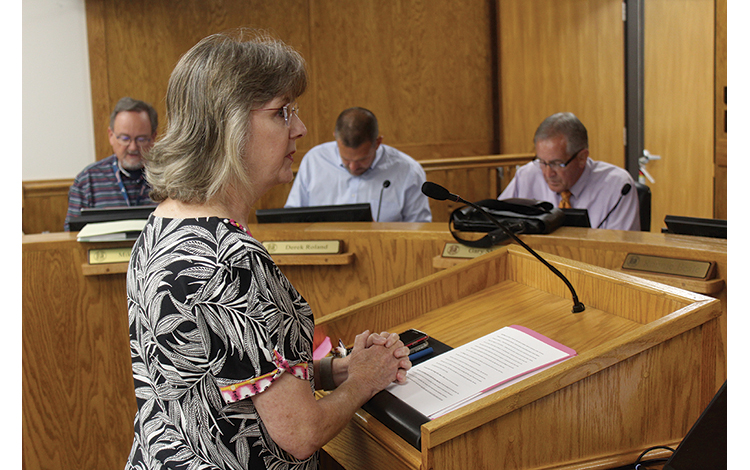
All things told, VOCA cuts will cost REACH about $200,000 between last fiscal year and this fiscal year. KIDS Place is also losing just over $200,000, not to mention reductions in money from fundraising drives that couldn’t take place when COVID-19 was at its worst. Their VOCA funding has been cut by 67 percent, twice as much as they were told to expect in 2020. KIDS Place executive director Alisa Ashe says that they need to make up at least $110,000 of that money to maintain a basic level of operations for the year, or else local traumatized children will have to go to Asheville to receive help. To bridge the gap, she went before the Macon County Board of Commissioners July 13 and asked for a one-time allocation of $75,000.
“We are working with our national partners to get a fix at the national level,” Ashe said. “There’s been widespread support on both sides of the aisle in Washington, but that’s not a quick fix. That fund has been depleted and it’s going to take a while to build those reserves back up.”
The commissioners decided to give KIDS Place the money in a 3-2 vote. Commissioners Ronnie Beale and Gary Shields argued that services provided by the organization are too valuable to the county to let fall behind because of money, while commissioners Josh Young and Paul Higdon felt that it needed to be a matter for the community funding pool if the county is to remain fiscally secure. The decision came down to chairman Jim Tate, who was also concerned about the dangers of overspending, but was more concerned about the county’s most vulnerable youth.
“I went home and had a conversation with my spouse about it, who’s a preschool teacher,” Tate said of his vote. “The good hit me and the tear kind of showed up and it sold me on my vote.”
REACH has been pursuing numerous ways of making up for their shortfall since they learned about it last year. They’ve consolidated their workforce, trimmed overhead costs in their budget wherever possible and sought out new sources for funding, including some provisions of the American Rescue Plan. Their thrift store has served as a critical source of community support and is now operating on a longer schedule.
“We rely on community donations, volunteers, and of course shoppers to continue to help support our services and victims within our community,” Anderson said. “For example, we have added extended hours at the thrift store on Thursdays, open until 8 pm, as a way to help further increase our revenue, and so far, this has been successful.”
REACH has done all of this without having to suspend any client services, but just like with KIDS Place, they’re going to need more help sooner or later. Fortunately for them, help is already on the way at the federal level in the form of the VOCA Fix to Sustain the Crime Victims Fund Act, which would create new sources of revenue for the fund in deferred prosecution and non-prosecution agreements. The bill was sponsored by representative Jerrold Nadler (D-NY) and passed the House of Representatives earlier this year by a vote of 384-38 and enjoyed wide support from democrats and republicans, including Madison Cawthorn (R-NC) of North Carolina’s 11th district.
“This critical piece of legislation will shore up the Crime Victims Fund, ensuring that programs and services assisting victims of crime are more effective, more reliably funded and more accessible to those who may depend upon them,” Nadler said of the bill. “I implore the Senate to take action on this bill, and I look forward to seeing it signed into law.”
The Senate voted unanimously in support of the bill just last week. It will still take time to make up for the lost funding, but advocates are relieved that progress has been made.
“While this seems like a simple technical fix, this is a huge help in building up the fund in the years to come,” said Kathleen Lockwood, policy director for the North Carolina Coalition Against Domestic Violence. “For context, if this law had been in place at the beginning of 2021, there would have been an additional $500+ million dollars in this fund by now.”
For more information on services provided by REACH of Macon County and KIDS Place or to make a donation, call REACH at (828) 369-5544 or KIDS Place at (828) 524-3199.