
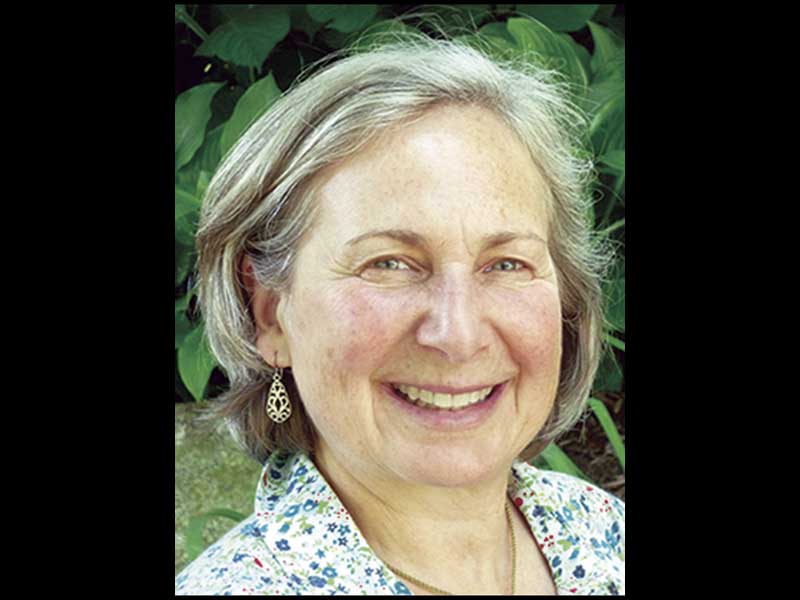
The Nikwasi Initiative has found its first executive director, a woman from Oregon with a track record of championing cultural heritage and working with Native American tribal leaders.
Elaine Eisenbraun has served as executive director of three organizations – an outdoor education center, a river and landscape restoration organization, and a healing arts start-up. She most recently worked as an advisor to the EPA on environmental education. She studied forestry as an undergraduate and earned a master’s degree in business leadership.
“My career and everything I’ve done in my life has been focused on connecting people to heritage and to place and to environment,” Eisenbraun said from her mountaintop home in Long Creek, Oregon.
The Nikwasi Mound is “particularly special because it celebrates a long, long history of people connected to a particular place on the planet,” she said.
“Nikwasi is also a story of the people and the place and how they sustain each other, both physically and spiritually,” she said. “That’s true for the past, the present and the future. I think it’s about being connected.”
The Initiative board of directors conducted a nationwide search for its first executive director.
“In the end, Elaine emerged as the perfect fit,” said Barbara McRae, co-chair of the Nikwasi Initiative. “Her background proves her to be an innovative thinker and a doer. She has had a lot of experience building young organizations like ours, and she has a strong grant-writing and fundraising background. As the Cherokee are partners in this Initiative, it was important to us that she has worked closely with tribal leaders and members in the Northwest.”
Funding for the position comes from the Eastern Band of Cherokee Indians, McRae said.
Eisenbraun said she has spent her time at home during the pandemic getting up to speed on the mound and its place in history, both for the Cherokee and the Town of Franklin.
“I think it’s an amazing process that the whole community is going through – starting with identifying the value of it, such as, years ago when the kids did their penny drive to protect it,” she said.
Now the challenge is “recognizing the dynamics of how values and needs change, and what it means to different groups of people,” Eisenbraun said. “It can create tourism that’s of value to the town and the county. For the tribe, it has an intense sense of spiritually.”
Eisenbraun is well aware of the controversy that swirled around the decision to transfer the mound property from the Town of Franklin to the Nikwasi Initiative.
“I come from a region in eastern Oregon where controversy is sort of a way of life,” she said. “There are a lot of challenges where I live now in terms of timber issues, wildlife issues and grazing issues. That requires a lot of diverse ideas and disparate approaches on how to deal with those things.
“Controversy is nothing new to me,” Eisenbraun said. “What I look forward to is building understanding. That may means sitting down and having a cup of coffee with people that fell like they ‘lost’ [in the mound decision]. I want to hear from everyone.”
Eisenbraun acknowledges the skepticism among some residents about the Nikwasi Initiative’s plans for the mound and the need to produce tangible progress.
“A lot of my background is project management and getting installations completed on the ground, and I drive forward until we get ’em done,” Eisenbraun said. “… You just can’t keep planning forever. You really need to accomplish something tangible that people can go see.”
The first objectives will be to get the informational kiosks installed at the Nikwasi Mound and in Cherokee.
“I would like to see the kiosk for the Nikwasi Mound up by year’s end, Eisenbraun said. “I’d like to see the one in Cherokee pretty darned close to being installed at year’s end.”
Eisenbraun talked about the enthusiasm she feels from the Eastern Band of Cherokee Indians for the mound and its place at the heart of a planned cultural corridor connecting heritage sites. The tribe has planned to convert the old tire store next to the mound into a cultural center.
“I don’t see any reason why that installation can’t be expected within five years, and I would hope maybe even less than that,” she said.
Eisenbraun had planned to be in Franklin by April 1, but the coronavirus pandemic complicated travel plans. She and her husband, Marty, plan to set off next week for the 2,500-mile drive to Franklin from Oregon.
Eisenbraun has her own connection to the Carolinas. She has two daughters who live in South Carolina.
“My husband and I had been planning a long time to come to that area to be near family,” she said.
Eisenbraun hopes to get to Franklin before Mother’s Day on May 10 – and get her first look at the historic mound that brought her here.
co-chair of the Nikwasi Initiative. “Her background proves her to be an innovative thinker and a doer. She has had a lot of experience building young organizations like ours, and she has a strong grant-writing and fundraising background. As the Cherokee are partners in this Initiative, it was important to us that she has worked closely with tribal leaders and members in the Northwest.”
Funding for the position comes from the Eastern Band of Cherokee Indians, McRae said.
Eisenbraun said she has spent her time at home during the pandemic getting up to speed on the mound and its place in history, both for the Cherokee and the Town of Franklin.
“I think it’s an amazing process that the whole community is going through – starting with identifying the value of it, such as, years ago when the kids did their penny drive to protect it,” she said.
Now the challenge is “recognizing the dynamics of how values and needs change, and what it means to different groups of people,” Eisenbraun said. “It can create tourism that’s of value to the town and the county. For the tribe, it has an intense sense of spiritually.”
Eisenbraun is well aware of the controversy that swirled around the decision to transfer the mound property from the Town of Franklin to the Nikwasi Initiative.
“I come from a region in eastern Oregon where controversy is sort of a way of life,” she said. “There are a lot of challenges where I live now in terms of timber issues, wildlife issues and grazing issues. That requires a lot of diverse ideas and disparate approaches on how to deal with those things.”
Eisenbraun acknowledges the skepticism among some residents about the Nikwasi Initiative’s plans for the mound and the need to produce tangible progress.
“A lot of my background is project management and getting installations completed on the ground, and I drive forward until we get ’em done,” Eisenbraun said. “… You just can’t keep planning forever. You really need to accomplish something tangible that people can go see.”
The first objectives will be to get the informational kiosks installed at the Nikwasi Mound and in Cherokee.
“I would like to see the kiosk for the Nikwasi Mound up by year’s end, Eisenbraun said. “I’d like to see the one in Cherokee pretty darned close to being installed at year’s end.”
Eisenbraun had planned to be in Franklin by April 1, but the coronavirus pandemic complicated travel plans. She and her husband, Marty, plan to set off next week for the 2,500-mile drive to Franklin from Oregon.
Eisenbraun has her own connection to the Carolinas. She has two daughters who live in South Carolina.
“My husband and I had been planning a long time to come to that area to be near family,” she said.
Eisenbraun hopes to get to Franklin before Mother’s Day on May 10 – and get her first look at the historic mound that brought her here.