
Local economy is rebounding
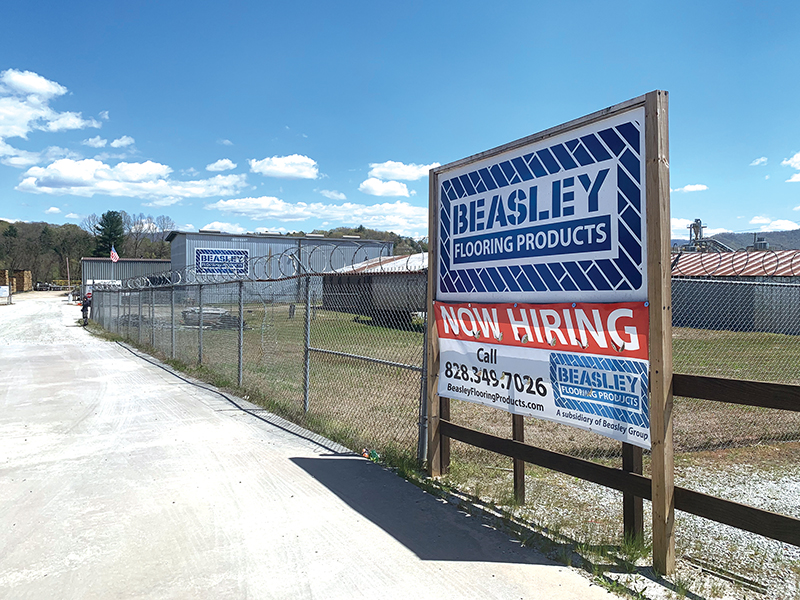
After a year of shutdowns, job losses, and economic contraction, Macon County’s economy seems to be recovering.
When the COVID-19 pandemic forced governments around the world to enforce stay-at-home orders last spring, the short-term effects on the economy were as bad as any recession in recent memory. Now, roughly a year removed from the worst days of the shutdown, Macon County’s economy is making a modest recovery.
“The numbers we have right now are for February 2021, and the problem with February numbers is that is when we typically start seeing the peak of our seasonal unemployment,” said Paula Alter, the NCWorks career center director for Macon, Jackson, and Swain. “That [includes] people from the seasonal places that are closed down, for example the railroad, that are not going to reopen again until end of March, beginning of April. So these numbers are always a little bit skewed, but in February of 2021, we had 814 people unemployed. In January, we had 873, so that’s actually good, and our unemployment rate went from 5.6 to 5.2.”
While February’s 5.2 percent rate was nearly one and a half points higher than February 2020’s mark of 3.8, the year’s job losses are fairly modest considering the county’s 11.3 percent rate last April. According to data from the Bureau of Labor statistics, the national unemployment rate over the same period jumped from 3.5 percent in February 2020 to 6.2 percent in February 2021. Although Macon County relies heavily on tourism and hospitality, the flood of vacationers and second-home buyers as states relaxed shutdowns last fall seem to have made up for 2020’s disastrous spring.
“I think if you look at our economic indicators over the last year, the economy for the most part, and in consideration of our COVID-19 situation, has fared really well, locally,” said Macon County Economic Development Director Tommy Jenkins. “Now, there are some sectors who have had a difficult time – some of our local restaurants, theaters and stuff, where with the occupancy [limits], they couldn’t get the business they need to maintain their bottom line. But I think that we’re seeing a good recovery from that. What really helped our economy was that people wanted to come to the Franklin-Highlands area in the mountains. I think they saw this as a sanctuary in COVID-19.”
With in-person businesses slowly moving to fuller occupancy and a boom in home sales driven by transplants from larger cities, Macon County’s economy seems to be steadily returning to pre-pandemic levels. In addition to larger outside factors however, Alter said the county’s businesses have taken steps to adapt to physical distancing.
“We, initially of course, had a great number of people on unemployment because of the nature of a lot of the work in this area of being hospitality and tourism-based,” said Alter. “As time went on, we saw the employers start to reopen. … Some businesses [have told us] that they have done better, and that they’d ended up having a good year. I think a lot of it is because our employers looked to see ways that they could adapt and be flexible.”
With the proliferation of virtual telecommunications platforms like Zoom and physically-distanced transactions for in-person businesses like restaurants and retail stores, many local businesses have drastically changed their businesses models to keep the lights on without physical contact. For those workers who remain unemployed and several of the businesses posting the more than 300 job openings on NCWorks’s website, NCWorks and the Economic Development Commission will host a local Job Fair in the Robert C. Carpenter building this Friday, April 23 from 11 a.m. to 2 p.m.
While last year’s shutdowns were disastrous for many businesses, it seems that Macon County has escaped the worst of the pandemic’s effects.
“I’m cautiously optimistic that we’ll have some steady growth,” said Jenkins on the county’s prospects for the next 6-18 months. “If we get back to normal first and get everybody on the same level playing field, the economy will continue to improve. Of course, I don’t have a crystal ball, but with our location, people want to relocate, because they think it’s a safe community and a great place to raise your family. As long as we can continue to work to provide employment opportunities, people are going to want to come here.”