
Additives slipped into illegal drugs can have tragic and unpredictable consequences, but the damage can be mitigated.
The McDowell County Sheriff’s Office recently put out a warning for an illicit drug called “Zene,” short for Isotonitazene or nitazene. The synthetic opioid is commonly used as a cutting agent with fentanyl, according to Macon County Sheriff’s Office Major Jonathan Phillips, who said the office has encountered it before. The Drug Enforcement Agency said the drug produces similar effects to other opioids and is more potent than morphine.
Another common cutting agent is xylazine or “tranq.” The drug is a veterinary anesthetic and sedative that is mainly used to treat horses. However, it is often cut with fentanyl to increase the drug’s potency and lengthen its effects.
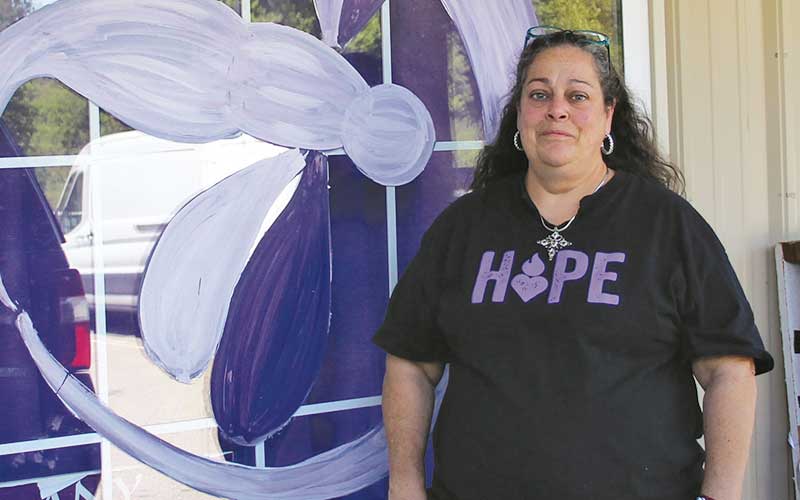
“Those are the two reasons, I think, that xylazine was introduced into the unregulated drug supply,” said Stephanie Almeida of Smoky Mountain Harm Reduction. “Apparently, the xylazine doesn’t allow the wound to heal … It’s usually because there’s an opening in the skin and it just won’t heal and it just gets worse and worse. A lot of folks have asked me if it eats the skin, and it actually doesn’t – it’s not that kind of drug – but it prevents healing.”
Almeida said the drug is hardly new and has been popping up for the last couple of years. She is more concerned with a new drug that has started trending nationally and only recently been noticed in North Carolina – medetomidine, another tranquilizer.
“We have reports nationally of people being unconscious for hours at a time … can you imagine what that looks like for folks that are not able to protect themselves? … That’s going to be a really big problem, because it’s stronger than xylazine and it’s really causing problems in other places,” she said. “So we’re beginning to learn all that we can about it so that we can educate the people that we serve, but also that we can start drug checking to see what’s in the stuff that’s here right now.”
While the drug itself is different, and while it may be more potent than its counterpart, its presence doesn’t change anything about the process of harm reduction. Almeida offered some basic advice to help prevent users from harming themselves with the new substances, starting with testing the drugs.
Smoky Mountain Harm Reduction has test strips it can provide to test the purity of drugs. It currently has strips for xylazine, but not for medetomidine, through Almeida said strips were currently being developed.
The site also provides education on how to use drugs safely in order to reduce the risk of users hurting themselves injecting substances improperly.
She also said users should try to use less of the substance and to never use alone. Being able to administer first aid and call for help saves lives.
For those looking to help, Almeida said the center is always looking for volunteers to make and provide food, clean, organize, put together overdose kits for users, and make donations. On an organizational level, Almeida said she would like to hold workshops to educate members of the public on how harm reduction works and what people can do to mitigate risk and save lives.
On a policy level, Almeida said the single most important change would be to expand the state’s “Good Samaritan” laws. The laws protect those who call first responders for help in the event of an overdose from prosecution, eliminating the risk to those who might hesitate to call for aid for fear of legal consequences.
Unfortunately, these laws do not protect people from every substance – methamphetamines are still fair game for law enforcement – and if a house contains multiple people, only the patient and the caller are protected, not any other users in the house. Expanding the legal protections would save lives, Almeida said.
She also wants to see expanded investment in prevention efforts and encouraged Macon County to spend the opioid settlement funds it currently has but has yet to spend. County Manager Warren Cabe said the funds are awaiting the hire of a specialist to manage them.
“I think the biggest thing for us is that we really want to keep people alive and healthy, right? Anything after that is fabulous, but our goal is saving lives right now,” Almeida said.