
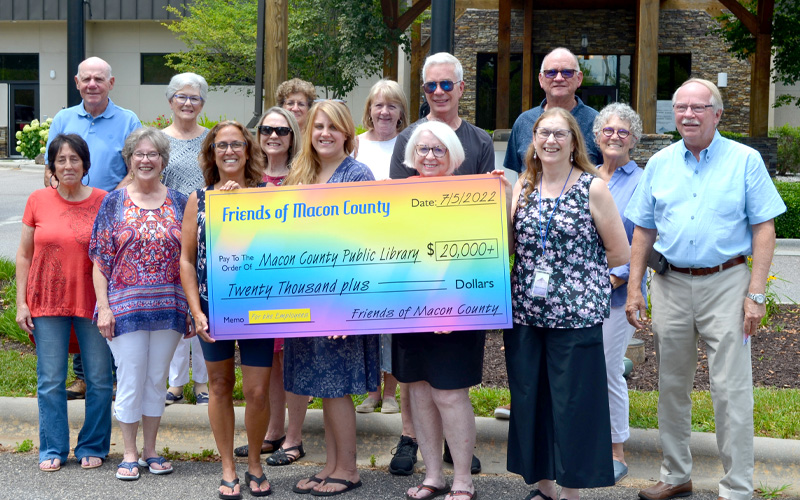
While the Macon County libraries did not receive the full amount they requested from the Board of County Commissioners, a private fundraising campaign has helped ensure the library staff will get salary increases.
In passing the budget for the 2022-23 fiscal year, the commissioners approved an increase of $52,470 for the libraries bringing the total allocation to $1,101,860. The library had originally requested $1,158,000 for the new fiscal year, which began July 1.
During the county budget work session on June 7, Commissioner Ronnie Beale requested an additional $20,000 in funding, but the request was not approved. Commissioner Paul Higdon said he could not support increasing funding “to a publicly funded institution that supports a display that is so divisive in our community,” referencing a Pride Month display at the library. In a statement at the June 14 County Commissioners meeting, Higdon said the display should be funded with private money and moved to private property.
When the $20,000 was not approved, a private effort got underway to raise the additional money. Macon County resident Lenny Jordan said he began calling library supporters who then reached out to others. In five days, they had the $20,000 and within 10 days had raised $30,455. The donation was presented to the library on July 5.
With the funding from the county and the donation, the 29 employees at the three libraries in the county will receive a 5.5% salary increase, according to Library Director Karen Wallace. The library employees are not county employees. The library director said the extra $10,000 will be placed in contingency for future use.
“It’s really been a god-send,” Wallace said about the donation. “The money is important, but it’s been really meaningful for the staff to have this level of appreciation from the community. It’s just wonderful.”
Library budget
During the June 14 commissioners meeting, Higdon raised some questions about the library funding and the operating agreement between the county and Fontana Regional Library. Higdon said when the agreement comes up for review later this year, they may want to revisit the part of the agreement concerning the salaries. When the county allocates money for the library it is not earmarked for certain line items such as salaries. The library decides how the money is spent.
Higdgon said it was his understanding that state funds paid library staff salaries. Wallace said according to the agreement, funding from the state primarily pays the salaries for the regional staff who work at the Fontana system headquarters in Bryson City and the operations of the six libraries in the region. Wallace said county funding pays for personnel expenses such as health insurance, retirement and FICA.
The county owns the library building, provides building and grounds maintenance and pays for utilities. The library pays for waste disposal, telephone and internet service.
The budget for the 2021-2022 fiscal year was a follows:
Franklin library: Total budget - $956,210; county funding - $794,890; salaries - $466,997; total personnel cost - $719,045
Highlands library: Total budget - $269,628; county funding - $200,000; salaries - $113,545; total personnel cost, $174,218
Nantahala library: Total budget - $57,725; county funding - $54,500; salaries - $26,715; total personnel cost - $32,129
Wallace said in addition to county funding, the libraries’ revenue includes donations from the Friends of the Library, Hudson Library Board contributions to the Hudson Library in Highlands, fines and fees, endowment funds, donations, some small grants and appropriated funds for ongoing projects. State funding is allocated to the Fontana Regional Library headquarters and used to support the six libraries through the headquarters’ budget. Large grants are also included in the headquarters’ budget.
Wallace said inflationary increases in funding are necessary to help maintain services and to provide opportunities for expanding services. As an example, she cited the growing demand for e-books and audio books and that those are “very expensive.” Also, the libraries within the region share books, which requires someone to drive the books from one location to another and with the rise in gas prices, that has been an increased expense.
“Books are more expensive, everything is more expensive than it used to be,” she said.
Wallace said the original operating agreements with the regional libraries dates back to the 1950s, and with some changes in state code, the agreements were updated in 2012. At that time, it was decided the agreements should be reviewed every 10 years. If there are no changes, the agreements automatically renew.
“We hope to sit down with all the counties and talk about our financial structure to help improve understanding of how we’re set up,” Wallace said.