
Monoclonal antibodies are rising in prominence as a treatment for COVID-19, and the Macon County Board of Health discussed their strategy regarding the measure during their last meeting.
Monoclonal antibodies are laboratory grown proteins that, when introduced into the body, can help the immune system fight off viruses just like natural antibodies can. Proteins like sotrovimab, casirivimab and imdevimab are designed specifically to be effective against COVID-19. The Food and Drug Administration has given these antibodies emergency use authorization for high-risk patients who are already suffering from the virus.
“With the authorization of this monoclonal antibody treatment, we are providing another option to help keep high-risk patients with COVID-19 out of the hospital,” said Patrizia Cavazzoni, director of the FDA’s Center for Drug Evaluation and Research, following the authorization of sotromivab in May. “It is important to expand the arsenal of monoclonal antibody therapies that are expected to retain activity against the circulating variants of COVID-19 in the United States.”
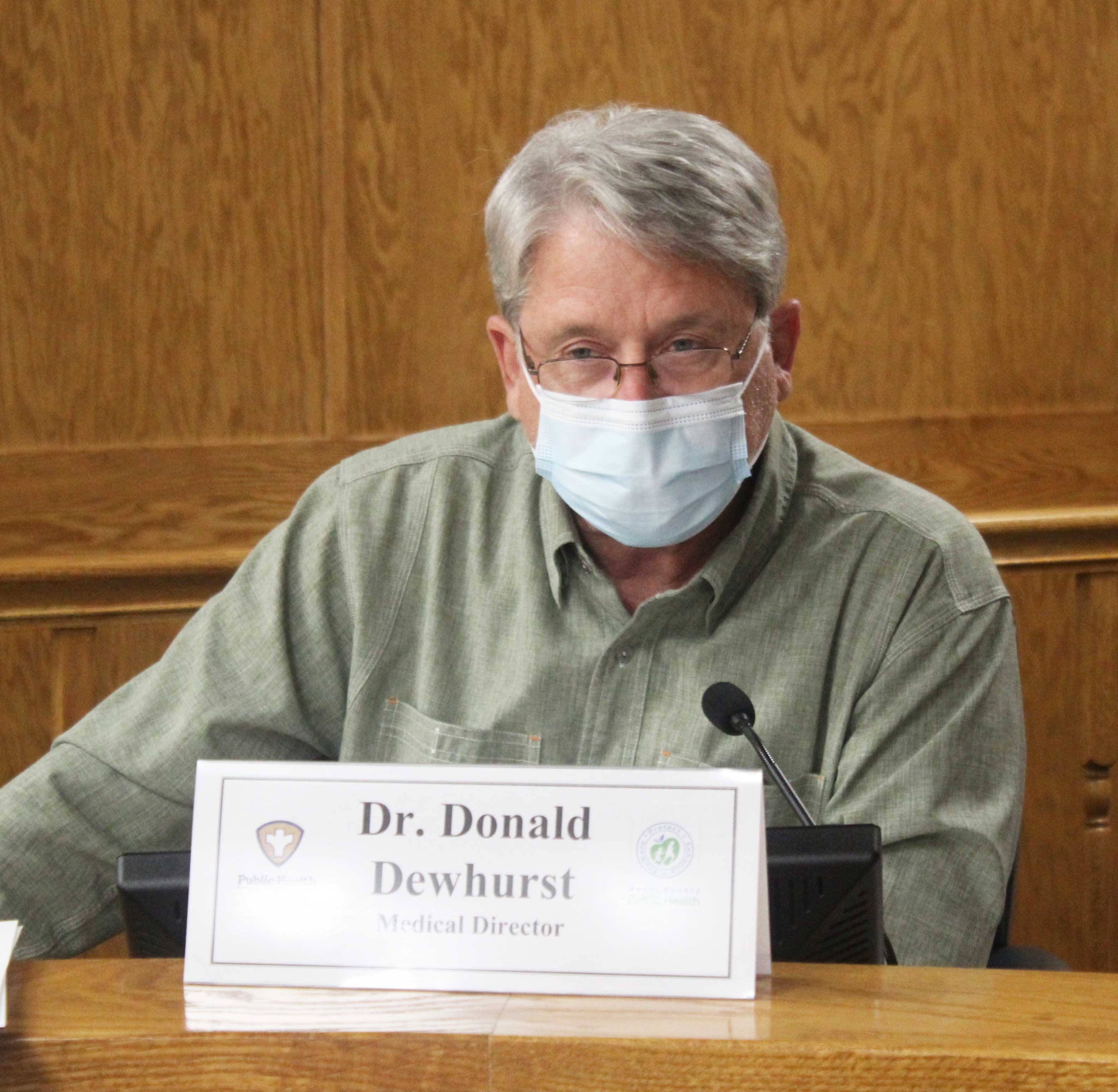
During the Board of Health’s meeting on Oct. 26, Dr. Donald Dewhurst pointed out similarities between monoclonal antibody treatments and the vaccines. Both help the body create an immune response to coronavirus, both have shown to be highly effective in the public runs they’ve had, and both have been hampered by a lack of public information at some point during their use. Both have also been given emergency authorization only for specific populations, but Dewhurst says that not only will most interested patients qualify, but that the FDA’s emergency authorization is worth trusting.
“Most of us in the medical field, when we have emergency use authorization, that’s pretty good,” Dewhurst said.
Dewhurst isn’t alone in his support for getting the word out about monoclonal antibody treatments. Dr. Gustav Wilde, a private practitioner who spoke during the meeting’s public comment session, also addressed their effectiveness and said the biggest problem with them was their lack of availability. However, he also said it wasn’t up to the Health Department to pro-vide the treatment because of their scarcity and the need for supply in hospitals.
“They’re out there, but supply is a problem,” Wilde said. “[The Health Department is] in the business of testing and vaccines and disease prevention, but not treatment.”
Macon County Public Health Director Kathy McGaha said her department is doing its best to inform more Macon County residents of the availability of the treatment through social media and press releases, but people need to speak directly with their physicians about the best care options for them.
“Both hospitals have the capacity to provide the treatment at their outpatient centers,” McGaha said. “The physicians in the area are aware of the treatment.”
There is one major difference between monoclonal antibody treatments and vaccines – one is proactive and the other is reactive. Long before people knew about COVID-19, the medical consensus was preventing a disease is better for your health than treating it after the fact. With care facilities already overwhelmed with COVID-19 patients, staffs spread thin and infections remaining prevalent, getting the vaccine and avoiding the virus altogether is still the best defense against the pandemic.
“The best thing is vaccinations ahead of time to prevent getting it to start with,” Dewhurst said. “And even if you still get it, it’ll be a milder case.”
The next meeting of the Macon County Board of Health will be on Tuesday, Nov. 16.