
Senate pushes for constitutional amendment questions
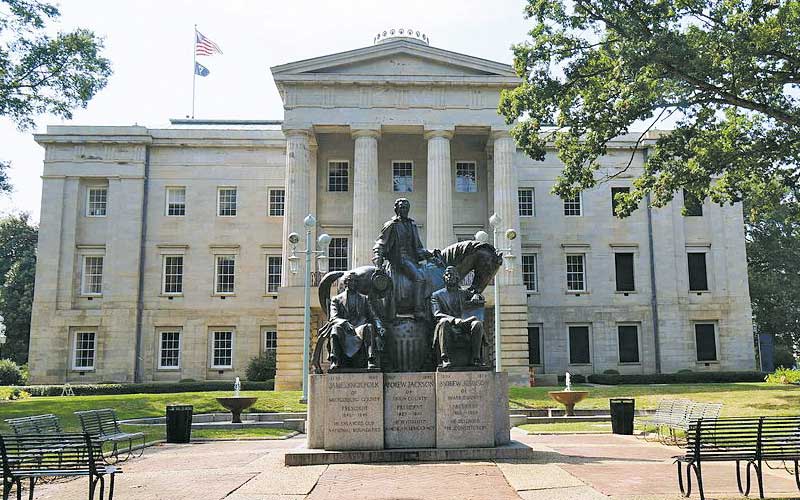
Before the 2025 session starts in January, the North Carolina General Assembly is trying to get two constitutional questions on the 2026 ballot and is joining other states in calling for a Constitutional Convention.
Weeks before the new state General Assembly starts in January, there is typically little business to conduct. However, during the last month of the 2023-24 session, the current body has been busy in this lame-duck time.
On Dec. 2, by a 29-20 margin, going along party lines, the state Senate passed a resolution asking for a Constitutional Convention. This follows a March 2023 vote by the state House, which was 21 months ago. Since the bill is a House Joint Resolution, the governor has no say and the resolution is thus ratified.
According to the resolution North Carolina passed, the purpose of the Constitutional Convention would be to examine term limits for members of Congress. Two-thirds of states, 34 out of 50, must apply for a Constitutional Convention for one to happen. Such a convention hasn’t happened in America since the Bill of Rights. Besides mandating that three-fourths of delegates approve any constitutional changes, there are guidelines on how a convention would be held or handled.
According to media reports, more than 30 states have passed resolutions calling for a Constitutional Convention but is still short of the 34-state threshold.
Senate overrides veto
Also, on Dec. 2, the Senate voted along party lines to override Gov. Roy Cooper’s Nov. 26 veto on Senate Bill 382.
Senate Bill 382 is an omnibus bill that while it includes Hurricane Helene recovery funding requests, most of the bill covers non-Helene items and transfers power away from recently elected Democrats.
However, the bill could have a tougher road to being overridden in the state House. The 63-46 vote on Nov. 19 had three Republican defections. All three represent Western North Carolina, including Franklin’s Rep. Karl Gillespie and Swain County’s Rep. Mike Clampitt. Rep. Mark Pless of Haywood County has publicly denounced the bill.
Those three defections would make the bill fall under the 60% threshold necessary to override the governor’s veto.
The House vote override vote was originally scheduled for Thursday, Dec. 5, but was withdrawn and rescheduled for Monday, Dec. 9, and then again for today (Wed, Dec. 11).
Constitutional amendments
While legal challenges persist over the 2024 Election, the state Senate aims to get two constitutional amendments on the 2026 midterm ballot.
On Dec. 2, the state Senate voted along party lines to pass 2026 state constitutional questions on income tax rate cap modification and more strict photo ID requirements.
The first would ask 2026 voters if they want to cap the maximum allowable income tax rate in North Carolina at 5%. Through state budgets, state Republicans have continually cut down the individual income tax rate. In 2024, it was 4.5%. In 2025, it’ll drop to 4.25% and after 2025, drop again to 3.99%.
The second question would ask 2026 voters if they want to require all voters, not just those voting in person, to present photo ID before voting. If voted through, the amendment would require the state General Assembly to pass new laws to ensure those voting through absentee ballots require photo identification.
Currently, absentee voters must show either a photo ID or fill out a form explaining why they can’t and offer a reason why they can’t. Those who don’t provide an ID can provide their driver’s license number, the last four digits of their social security number, or offer another “reasonable impediment.” There are also religious objections or natural disaster exceptions. County election offices handle absentee ballots on a case-by-case basis.
As of this week, the state House sent both amendment bills to a committee that as of press deadline isn’t scheduled to meet this week.
All 2023-2024 biennium business must conclude by the end of this month.