
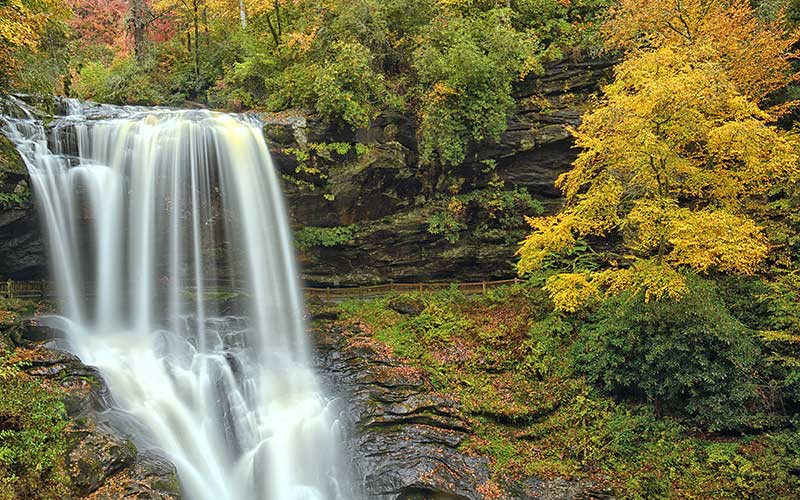
Western North Carolina is always beautiful, but in October, residents anticipate, and visitors arrive from around the world to see more than 200 species of trees dressed in colors that can be found in Crayola crayons: red-violet, goldenrod, asparagus, yellow-orange and more.
According to Western Carolina University biology professor Beverly Collins, this year will not disappoint. An early October cool-down at night, the right amount of rain, and cooler, sunny days are the required conditions for the best autumn tones. The weekend of Oct. 15 and 16 should bring good color, especially in the higher elevations and where maples, walnuts, sourwoods and black gums have turned. For the weekend on Oct. 22, Collins expects the colors might peak as hickories and oaks display their autumn beauty.
With no drastic weather changes or strong storms, the season should end around the first week in November with beeches and more oaks showing late fall colors. The Weather Channel forecast for the remainder of the foliage season shows the same conditions, with the exception of increasingly cooler temperatures, continuing into early November.
Collins explained that the colors that make fall foliage so unique exist in the leaves during the other three seasons. “Chlorophyll makes the leaves appear green, but it is destroyed in the fall,” she said. Once temperatures drop, the chlorophyll is degraded and variations of red, purple, yellow and brown are revealed.
Bestshortlists.com includes the Carolina mountains as one of the top five best places in the U.S. to see fall foliage. The Blue Ridge Parkway, Clingman’s Dome at Great Smoky Mountains National Park, Looking Glass Rock near Brevard, and Cowee Mountain Overlook are just a few of the many locations to enjoy the beauty.